
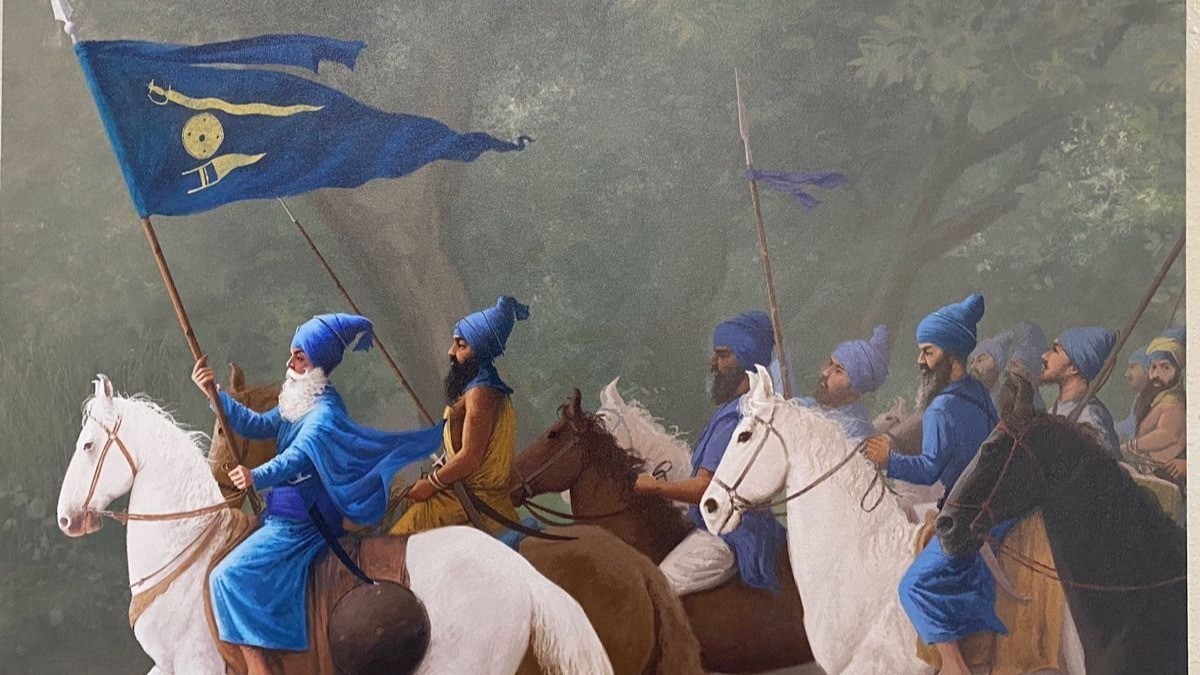
Vaisakhi 1699 –The Birth of the Khalsa and the Sikh Worldview
By Gurjot Singh
Vaisakhi holds a unique and powerful place in Sikh history. It is not merely a festival, but the culmination of a 230-year journey led by the ten Sikh Gurus to establish a spiritually and temporally sovereign way of life. Vaisakhi 1699 marks the moment when the mission of Guru Nanak reached its fulfilment through the unveiling of the Khalsa Panth by Guru Gobind Singh Ji.
To understand the true significance of Vaisakhi, it is important to first reflect on the world before the advent of Guru Nanak. Society at that time was deeply divided and confused in its understanding of spirituality. There were countless beliefs about God, often contradictory and based on rituals and promised miracles rather than truth. Religious practitioners had become restricted to certain castes, while others were excluded because of their caste or gender. Women were denied dignity and spiritual participation, and inequality was deeply rooted in everyday life.
In this environment of confusion and injustice, Guru Nanak began a revolution grounded in truth and simplicity. He questioned the very structure of society by asking why women were denied spiritual rights and why individuals like Bhai Mardana were treated differently due to caste. Through his teachings, Guru Nanak introduced a clear and universal worldview based on Ik Oankar, One Supreme Being. This principle established that all human beings are equal, and that the same Divine light exists within everyone. That the God of different religions and sects is the same One Supreme Being. We may remind ourselves of the Supreme Being through any name, viz., Waheguru, Hari, Allah, Ram, Raheem, Khuda, God, G-d or any other such names, it makes no difference to the Supreme Being. We remind ourselves of Waheguru’s presence for our own upliftment. This message of Guru Nanak changed the way his Sikhs (his students) looked at the whole relationship between the Creator and the creation.
Unlike many spiritual systems that separate worldly life from spiritual life, Sikhi presents a holistic approach. It teaches that one must live in the world while remaining spiritually connected. A Sikh is not meant to withdraw from society, but to actively participate in it with honesty, compassion, and responsibility. This idea later manifested itself as the principle of Miri-Piri (tr. Temporal-Spiritual) which represents the balance between spiritual wisdom and temporal responsibility.
Guru Nanak’s successors continued to develop this vision into a structured and sovereign path. They established institutions such as Langar, which practically demonstrated equality by bringing people of all backgrounds together to share a meal. They promoted the use of Gurmukhi script to make knowledge accessible to all. They uplifted the status of women, and created centres like Amritsar that became hubs of spiritual and social life based on Sikh principles. Most importantly, they emphasised that standing against injustice is not optional, but a core responsibility of a Sikh.
This continuous development reached its completion on Vaisakhi in 1699 at Anandpur Sahib. Guru Gobind Singh gathered a large congregation of people from diverse backgrounds. In a moment that would define Sikh history, he stood before the sangat and asked for a volunteer willing to offer their head to the Guru. The sangat was stunned, but one by one, five individuals stepped forward with complete faith and surrender. These five became known as the Panj Pyare—Bhai Daya Singh, Bhai Dharam Singh, Bhai Himmat Singh, Bhai Mokam Singh, and Bhai Sahib Singh.
Guru Gobind Singh ji then initiated them into the Khalsa through the Khandey-Ki-Pahul (Sikh Initiation, lit. tr. “Imbibe the Double-edged Sword”) and gave them a distinct identity, free from caste and social divisions. Men were given the name Singh, meaning lion, and women the name Kaur, meaning princess. The Khalsa was thus established as a community defined by equality, discipline, courage, and spiritual awareness.
In a remarkable and unparalleled act, Guru Gobind Singh Ji then bowed before the Panj Pyare and requested to receive Pahul from them. This moment established a profound principle in Sikh tradition, that the Guru and the Khalsa are one. Authority was no longer centred in an individual alone but shared with the collective body of initiated Sikhs, the Khalsa.
The creation of the Khalsa represents the practical expression of the Sikh worldview. It is a community that rejects caste and inequality, embraces the householder’s life, and commits to both spiritual growth and social responsibility. A Sikh is expected to live with integrity, earn honestly, share with others, and stand firmly against injustice. This combination of spiritual depth and active engagement in the world distinguishes Sikhi from many other traditions.
Following this, Guru Gobind Singh Ji declared Guru Granth Sahib as the soul of the Guru and Khalsa Panth as the body of the Guru. This unique system ensures that Sikhs are guided both by divine wisdom and collective responsibility. This also means that when Khalsa gathers in the presence of Guru Granth Sahib, the Guru is present there.
Today, Vaisakhi is celebrated by Sikhs across the world. From Panjab to countries like New Zealand, Australia, Canada, US, United Kingdom, France, etc it serves as a reminder of identity, responsibility, and purpose. For the global Sikh community, Vaisakhi is not just a historical event but a living inspiration to uphold the values of equality, service, and justice in modern society.
Ultimately, Vaisakhi is a call for self-reflection. It asks each individual whether they are living according to the principles established by the Gurus. The message of giving one’s head is not about physical sacrifice, but about surrendering ego, aligning one’s thoughts with truth, and living with humility and courage.
The vision that began with Guru Nanak was completed through the creation of the Khalsa. The effort of 10 Gurus over 230 years was realised on Vaisakhi. It created a path where the spiritual and the political are one. We “give our heads” to the Guru today by dedicating our thoughts to the light, seeing the Divine in everyone, and standing up for those who cannot stand for themselves. The Khalsa belongs to the Wondrous Enlightener, and so does the Victory.
Disclaimer: This article is published by the Institute of Sikh Studies NZ (ISSNZ) for educational, cultural, and awareness purposes. It reflects Gurbani-based understanding and interpretations of Sikh history, philosophy, and values, The views expressed are those of the author and do not necessarily reflect the official position of the organisation.While every reasonable effort has been made to ensure the accuracy and reliability of the information presented, ISSNZ reserves the right to modify and improve if a factual or interpretative deficiency is pointed out by experts of Sikh history and philosophy. Readers are encouraged to consult primary sources for a fuller understanding. ISSNZ operates this website under New Zealand laws, and all disputes must be adjudicated in the jurisdiction of the Counties Manukau courts and the Auckland High Court.
For feedback, concerns, or contact: info@sikhstudies.co.nz